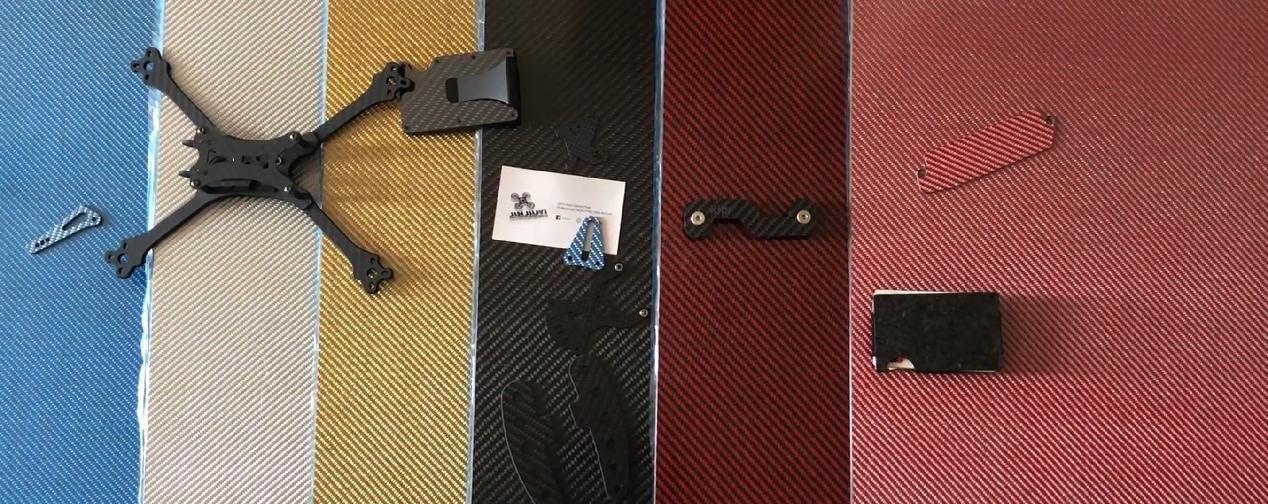
SHENZHEN, GUANGDONG, CHINA, October 29, 2026 /EINPresswire.com/ — In the rapidly evolving landscape of advanced engineering, industrial procurement specialists are increasingly tasked with sourcing components that meet stringent weight-to-strength ratios. As lightweight materials become the cornerstone of modern aerospace, automotive, marine, and robotics sectors, navigating the international marketplace requires an analytical approach. This Global Procurement Buyer’s Guide serves to illuminate the key performance indicators and technical standards defining the industry’s Top 10 Carbon Fiber Sheet Exporters. For procurement managers, the evaluation process extends far beyond basic material cost; it encompasses raw material traceability, structural integrity, and structural compliance with tight engineering tolerances. Selecting a reliable tier-one supplier is paramount to ensuring project longevity and operational efficiency.
A critical differentiator among leading global exporters is their technological sophistication, specifically with a Focus on CNC Precision. In advanced composite manufacturing, the raw carbon fiber panel represents only half of the structural equation; the subsequent machining process determines final performance. Industrial buyers must understand that raw composite panels are inherently difficult to clean-cut due to their anisotropic nature. Standard mechanical tooling often introduces structural flaws, such as localized micro-cracking, fiber pull-out, and delamination. Consequently, advanced Computer Numerical Control (CNC) precision machining has shifted from an optional value-added capability to an absolute technical prerequisite for high-stakes engineering procurement.
Understanding the Role of CNC Precision in Composites
CNC precision in composite manufacturing refers to the automated, multi-axis subtraction of material utilizing customized cutting geometry, optimized spindle speeds, and tailored feed rates. The underlying logic of this process differs fundamentally from traditional metal or plastic machining.
Micro-structural Challenges of Carbon Fiber Machining
While metals are isotropic materials with uniform physical properties in all directions, exhibiting continuous linear plastic deformation during cutting, Carbon Fiber Reinforced Polymer (CFRP) represents a highly anisotropic and heterogeneous structure. From a microscopic perspective, high-strength, high-modulus carbon fiber tows are interwoven at specific orientation angles (such as 0 degrees , 45 degrees , or 90 degrees ) and fully encapsulated within a relatively brittle, low-hardness epoxy resin matrix.
When a high-speed rotating cutting edge engages this structure, it does not experience a smooth, homogenous shear plane. Instead, the tool encounters tens of thousands of continuous, high-frequency alternating fatigue impacts per minute between the ultra-hard carbon fibers and the softer polymer phase. Without optimized parameters, this intense internal material stress easily triggers severe physical failure modes. For instance, when the tool transitions from abrasive fiber filaments to the matrix, any bluntness or inappropriate tool geometry will cause fiber pull-out rather than a clean, shearing fracture, leaving frayed edges. More critically, if the drilling thrust or cutting heat exceeds the interlayer shear strength of the resin, the laminate plies will undergo stress relaxation, leading to catastrophic delamination and micro-tearing that compromises the structural loading capacity before the component is even deployed.
Engineered Tooling Solutions for Advanced Composites
True CNC precision mitigates and eliminates these inherent material stresses through a comprehensive optimization of machinery, tooling, and cutting dynamics. In terms of tooling, conventional steel or standard carbide end mills suffer from rapid abrasive wear within meters of cutting carbon fiber, losing their keen edge almost instantly.
Leading fabricators utilize premium Polycrystalline Diamond (PCD) tooling and Chemical Vapor Deposition (CVD) diamond-coated solid carbide substrates. These tools feature complex, mathematically modeled geometries-such as high-performance compression routers featuring opposing helix angles-that generate simultaneous upward and downward shearing forces. This forces the top and bottom laminates inward toward the center of the plate, slicing the fibers cleanly and eliminating delamination at the boundary edges.
Machine Dynamics and Environmental Control
Furthermore, regarding machine hardware and motion control, high-precision gantry machining centers are equipped with high-rigidity frames and responsive linear guides to absorb high-frequency machining harmonics. Spindle speeds are typically elevated to ranges of 15,000 RPM to over 24,000 RPM, paired with meticulously calculated feed-per-tooth rates to ensure the tool shears the material rapidly before localized frictional heat can cause thermal degradation of the epoxy matrix. Because conductive carbon dust poses a severe short-circuit risk to factory electronics and an inhalation hazard, advanced CNC workstations must also integrate high-volume ring-vacuum extraction systems to evacuate micro-particles and heat at the immediate point of cut.
This multi-faceted technological control guarantees dimensional tolerances as tight as 0.05mm, systematically preventing dimensional drift across high-volume production lots caused by tool degradation or thermal expansion. For global procurement engineers and quality control inspectors, this micron-level precision ensures that every bolt hole, counterbore, interlocking slot, and complex peripheral contour interfaces seamlessly within multi-material structural assemblies-such as multi-rotor drone arms, aerospace instrumentation chassis, and six-axis robotic linkages. This seamless fitment eliminates assembly-induced stress concentrations and drastically enhances the fatigue life and operational reliability of the entire system under high-vibration and cyclic-loading conditions.
Sourcing Step-by-Step: The Ultimate Composite Buyer’s Guide
To optimize procurement workflows and mitigate operational risks, global purchasing teams should implement a structured evaluation framework. The following structured steps provide a blueprint for evaluating and onboarding composite exporters.
Step 1: Evaluate Raw Material Grades and Matrix Formulations
The structural capability of any machined composite component is fundamentally dictated by its precursor materials. Procurement professionals must look beyond generic “carbon fiber” descriptions and demand explicit material data sheets outlining the specific tensile modulus and resin matrix composition. Top-tier exporters utilize aerospace-grade polyacrylonitrile (PAN) fibers combined with high-performance epoxy systems designed for elevated glass transition temperatures (Tg). Ensure that potential suppliers can trace their raw material batches to certified resin infusion or prepreg manufacturers, guaranteeing consistent mechanical performance without hidden voids or inconsistent fiber-to-resin ratios.
Step 2: Audit Technical Capabilities and Lamination Infrastructure
An exporter’s technical depth directly influences the physical properties of the finished product. Industrial buyers should carefully review the manufacturer’s technical descriptions and production infrastructure. Specialized fabricators utilize advanced autoclave or high-pressure thermo-compression molding processes to control the fiber-to-resin ratio, minimizing internal voids to less than 1%.
To understand the core technology behind high-performance panels, procurement teams can consult comprehensive engineering resources such as the JJY technical framework. Proper lamination techniques ensure a symmetrical layout configuration (e.g., quasi-isotropic orientation), preventing panel warping and internal residual stress.
Step 3: Analyze CNC Cutting Tolerances and Edge Finishing Standards
Once panel quality is established, the focus transitions to secondary machining operations. Verify that the supplier’s manufacturing floor is equipped with dedicated CNC machining centers specifically optimized for composites rather than general-purpose metalworking machines. Inquire directly about their tooling inventory: do they rely on standard carbide cutters, or do they utilize PCD-tipped and diamond-coated compression routers? Request technical documentation detailing their multi-axis machining capabilities, dust extraction protocols, and routine calibration schedules to guarantee consistent micron-level dimensional repeatability across multi-thousand-piece production runs.
Step 4: Assess Customization Elasticity (OEM and ODM Capabilities)
Global logistics and custom product development cycles demand exceptional engineering agility from suppliers. A premier exporter should operate not merely as a toll manufacturer, but as an integrated solution provider capable of Original Equipment Manufacturer (OEM) and Original Design Manufacturer (ODM) execution.
This requirement means the supplier must possess the engineering capacity to interpret native CAD/DXF files, recommend optimization strategies for manufacturability, and construct custom tooling jigs for complex components. This flexibility is vital when developing specialized items like lightweight structural engineering plates, medical imaging beds, or customized automotive aerodynamic diffusers.
Step 5: Verify Quality Control Protocols and Batch Consistency
The final step in the procurement matrix involves auditing the exporter’s quality management system. Confirm that the exporter utilizes advanced metrology equipment-such as high-precision coordinate measuring machines (CMM) or optical non-contact scanning systems-to verify critical dimensions, hole diameters, and counter-sink angles against CAD specifications. Furthermore, examine their defect inspection protocols for identifying subsurface delamination or micro-cracking using ultrasonic C-scan non-destructive testing where applicable. Consistent thickness tolerance across the entire surface area of a sheet is critical; for example, a nominal 3.0mm plate must exhibit minimal deviation across production lots to prevent structural imbalance in high-speed rotating assemblies or drone arms.
Conclusion: Aligning with Industry-Leading Excellence
Successful global procurement in the composite sector relies on selecting an export partner that seamlessly merges premium raw materials with advanced machining capabilities. Industrial manufacturers require long-term stability, reliable supply chains, and consistent batch quality to support their production lines.
By prioritizing suppliers that demonstrate deep expertise in CNC precision, maintain transparent technical documentation, and offer extensive OEM/ODM customization capability, global enterprises can successfully future-proof their supply chains. These strategic partnerships enable companies to field high-performance, lightweight structural components that meet the evolving demands of modern industry.
For detailed inquiries regarding high-precision composite manufacturing, custom CNC machining capabilities, and structural material options, please visit the global corporate portal at Jinjiuyi.
JJY
JJY
Legal Disclaimer:
EIN Presswire provides this news content “as is” without warranty of any kind. We do not accept any responsibility or liability
for the accuracy, content, images, videos, licenses, completeness, legality, or reliability of the information contained in this
article. If you have any complaints or copyright issues related to this article, kindly contact the author above.

Media gallery