The luxury goods market is growing steadily due to rising disposable income, digital retail growth, and demand from emerging economies.
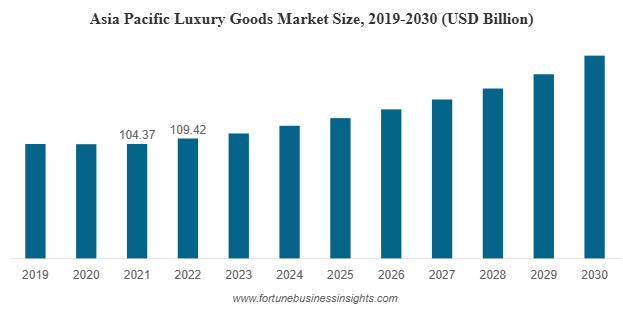
NY, UNITED STATES, February 9, 2026 /EINPresswire.com/ — The global Luxury Goods Market is witnessing strong and sustained growth, supported by rising consumer spending on premium lifestyle products and expanding global brand presence. The market was valued at approximately USD 284.0 billion in 2023 and is projected to reach USD 392.4 billion by 2030, growing at a compound annual growth rate (CAGR) of 4.7% during the forecast period.
Luxury goods include high-end fashion, accessories, watches, jewelry, cosmetics, fragrances, and other premium personal products. The market continues to benefit from increasing disposable incomes, urbanization, and evolving consumer preferences toward exclusivity and brand value. Premium products are key entities showcasing the status symbol of its owner. Such products’ excellent quality and high durability come at the highest price, affordable to only a small global population. Therefore, companies are targeting a wealthy population with creative designs, as the product cost is usually not the criteria for such groups, wherein the uniqueness and eminence of the product are the key deciding factors before their purchase.
Get a Free Sample PDF- https://www.fortunebusinessinsights.com/enquiry/request-sample-pdf/luxury-goods-market-103866
For instance, in April 2023, Bernhard H. Mayer, a QNET LTD.-owned Swiss personal fashion brand, launched the Mecanique Collection, a timepiece collection of luxury watches of a unique mecanique design style in the Hong Kong market.
Therefore, introducing novel luxury goods designs would help the market grow rapidly in the forecast period of 2023-2030.
Luxury Goods Market Overview
The luxury goods market represents a dynamic segment of the global consumer goods industry, driven by aspirational purchasing behavior and brand-conscious consumers. The market caters to both functional and symbolic consumption, where luxury items serve as indicators of social status, quality, and craftsmanship. Growth is supported by innovation, premiumization strategies, and expansion into emerging economies.
Luxury Goods Market Trends
Key trends shaping the luxury goods market include:
• Rapid growth of online luxury retail platforms
• Integration of advanced technologies such as smart features and digital authentication
• Rising demand for sustainable, ethical, and eco-friendly luxury products
• Increasing popularity of personalized and limited-edition offerings
• Strong influence of social media, celebrities, and digital marketing campaigns
These trends are transforming how consumers discover, purchase, and interact with luxury brands.
Luxury Goods Market Growth Factors
Several factors are contributing to the expansion of the luxury goods market:
• Rising global high-net-worth individual (HNWI) population
• Increasing purchasing power in developing and emerging economies
• Strong demand from millennials and Gen Z consumers
• Expansion of luxury brands into untapped regional markets
• Growth of travel retail and duty-free luxury shopping
Together, these drivers are accelerating market growth and strengthening brand loyalty worldwide.
Luxury Goods Market Segmentation Analysis
The luxury goods market is segmented based on product type, end user, and distribution channel.
By Product Type:
• Watches and jewelry
• Perfumes and cosmetics
• Clothing
• Bags and purses
• Other luxury goods
Clothing and fashion accessories continue to hold a significant market share due to frequent product launches and strong consumer demand.
By End User:
• Women
• Men
The women’s segment dominates the market owing to higher demand for luxury fashion, beauty, and accessories.
By Distribution Channel:
• Offline retail stores
• Online platforms
Although offline stores remain dominant, online channels are experiencing faster growth due to convenience and global accessibility.
Speak to Analyst- https://www.fortunebusinessinsights.com/enquiry/speak-to-analyst/luxury-goods-market-103866
Regional Insights
Regionally, the luxury goods market demonstrates varied growth patterns:
• Asia Pacific leads the global market, accounting for the largest share due to rising disposable incomes and expanding middle-class populations in countries such as China, India, and Japan.
• Europe remains a major hub for luxury production and consumption, supported by strong heritage brands and tourism-driven demand.
• North America shows steady growth, driven by strong consumer purchasing power and high demand for premium fashion and accessories.
• Latin America and the Middle East & Africa are emerging markets, offering new growth opportunities due to urbanization and increasing brand awareness.
Top Companies in the Luxury Goods Market
Major companies operating in the luxury goods market include:
• LVMH
• Compagnie Financière Richemont SA
• Kering SA
• Chow Tai Fook Jewellery Group
• The Estée Lauder Companies
• Luxottica Group SpA
• Swatch Group Ltd.
• L’Oréal Group
• Ralph Lauren Corporation
• Shiseido Company, Limited
These companies focus on innovation, strategic acquisitions, sustainability initiatives, and digital transformation to strengthen their market positions.
Key Industry Developments
• April 2023: Hey Harper, a Portugal-based luxury jewelry maker, launched Titled ICONS, a new capsule collection of jewelry products in the U.K. The collection includes the GILDED THORNS Ear Cuff, PETALS SPIRAL Bracelet, CRYSTAL BLOOM Ring, GARDEN OF LIGHT Brooch, and others.
• January 2021: OC Oerlikon, a Switzerland-based technology group, acquired Coeurdor, a full-service provider of components for luxury bags, belts, watches, and others to expand its presence in the high-end coatings industry for luxury goods.
• November 2020 – Farfetch, Alibaba Group, and Richemont partnered to help promote digitization in the luxury industry.
• October 2020: Ralph Lauren introduced the on-demand manufacturing of custom packable jackets in the U.S. and EMEA.
• October 2020 – LVMH announced the acquisition of Tiffany & Co. for USD 131.50 per share in cash. This acquisition in the goods market is expected to strengthen the portfolio of the luxury jewelry section of LVMH.
Conclusion
The global luxury goods market is poised for continued expansion, supported by evolving consumer lifestyles, technological advancements, and increasing demand across emerging regions. As brands focus on innovation, sustainability, and digital engagement, the market is expected to maintain steady growth through 2030.
Ashwin Arora
Fortune Business Insights™ Pvt. Ltd.
+1 833-909-2966
sales@fortunebusinessinsights.com
Legal Disclaimer:
EIN Presswire provides this news content “as is” without warranty of any kind. We do not accept any responsibility or liability
for the accuracy, content, images, videos, licenses, completeness, legality, or reliability of the information contained in this
article. If you have any complaints or copyright issues related to this article, kindly contact the author above.