
Key Takeaways
- When water damage strikes, homeowners’ panic often overrides extensive comparison, leading them to prioritize the first company that offers immediate help and reassurance.
- During an emergency, the “panic brain” prioritizes immediate speed and reassurance, often leading homeowners to temporarily overlook detailed service lists, certifications, and craftsmanship, which are typically considered during calmer research.
- The first hour of communication is your real sales pitch – not your brochure, not your reviews.
- A vague “24/7” badge on your website is less effective and fails to build trust compared to providing specific details about your emergency response process.
- Local SEO and AI search summaries are now the gatekeepers to the shortlist – if your content can’t be read fast by a machine, you’re invisible when it counts most.
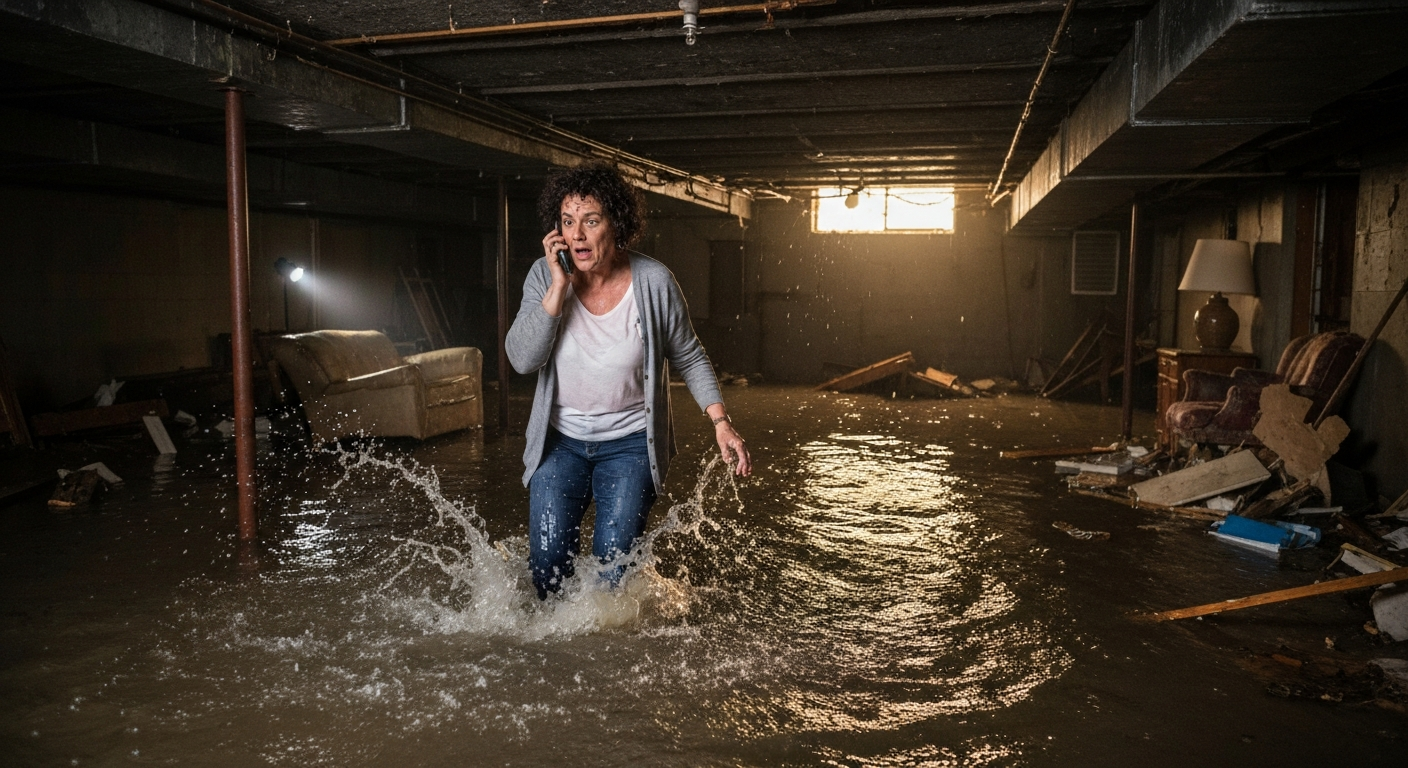
There’s a specific kind of panic that hits at 11 p.m. when a pipe bursts. It’s not the slow-burn anxiety of a kitchen renovation gone sideways. It’s sharp, immediate, and it completely rewires how a person makes a buying decision. Understanding that rewiring – and engineering your business around it – is what separates the restoration companies that stay busy from the ones wondering why the phone isn’t ringing.
Speed Is the Entire Decision
When water is spreading across a basement floor, the homeowner isn’t opening a spreadsheet to compare vendors. They’re scanning frantically for one answer: who can get here right now? Speed isn’t just a competitive advantage in this category – it is the category. The company that communicates arrival time fastest, most clearly, and most confidently wins the job before a single technician leaves the garage.
Profit Acuity’s analysis of how customers choose restoration services during emergencies concludes that homeowners call whoever makes them feel that help is already on the way. That insight reframes the entire marketing problem for restoration companies. A closer look at what actually drives those midnight hiring decisions reveals just how much of the sale happens before the phone ever rings.
Leading professional mitigation companies emphasize rapid response times, with some advertising technician arrival within 60-90 minutes of the call. If that kind of commitment isn’t front and center on your website – above the fold, in plain language – you’re handing the lead to whoever publishes it more clearly.
The Panic Brain Ignores Your Service List
There’s a version of your website that works well for calm, deliberate research. It lists certifications, explains your process, showcases your equipment. That version is mostly useless at midnight.
One Question Overrides Everything
The panicked homeowner has exactly one question burning through their mind: How fast can someone actually get here, and will they know what to do? Everything else – IICRC certification, years in business, service radius – is noise until that question is answered. Content that buries the response time three scrolls down loses the job. Ambiguity, in an emergency, reads as unavailability.
Why Craftsmanship Doesn’t Win the Midnight Call
This isn’t a knock on quality work. Craftsmanship absolutely matters – for reviews, for referrals, for repeat business. But it doesn’t win the initial emergency call. No homeowner standing in two inches of water is thinking, I wonder about their drywall finishing technique. They’re thinking about the water. Lead with speed; demonstrate quality once the crew is on-site.
Why the First Hour Is Your Real Sales Pitch
Most restoration websites describe what the company does. The ones that convert emergency callers describe what happens next – specifically, what the next 60 minutes look like for the person who just called.
Setting Expectations Reduces Anxiety and Builds Trust
A rattled homeowner is scared about more than the damage – they’re scared about the unknown. A clear, published walkthrough of the first hour (what to do before the crew arrives, what the crew does on arrival, how quickly containment begins) gives that person a sense of control. The company that provides calm, structured information in a chaotic moment earns trust that no service list can manufacture.
The 24-48 Hour Mold Clock Justifies Calling Now
Here’s a fact worth publishing prominently: mold and mildew can begin developing within 24 to 48 hours of water exposure, according to industry standards and FEMA guidance. That window – sometimes called the “Golden Hours” – is the difference between a straightforward extraction job and a full remediation. Explaining this honestly in your content isn’t fear-mongering. It’s the truth that converts a homeowner who’s thinking I’ll deal with it in the morning into one who picks up the phone right now.
Your ’24/7′ Badge Is Less Effective Than You Think
Every restoration company in your market has “24/7 emergency service” somewhere on their site, which means the phrase has stopped meaning anything. Most homeowners assume it routes to voicemail or an answering service that takes a message and promises a callback. A vague “24/7” badge is less effective and fails to build trust compared to providing specific details about your emergency response process.
Show the Dispatch Machinery, Not the Slogan
Replace the badge with specifics. Who answers at 3 a.m.? How does dispatch actually work? What happens in the five minutes after the call ends? Content that walks through the mechanics of after-hours response turns a hollow slogan into something a scared homeowner can actually believe. That’s the difference between a claim and proof – and proof is what converts at midnight.
Insurance Fear Stalls the Call
Address It Early or Lose the Job
Right behind “how fast” is the second question freezing homeowners in place: Is this going to be a nightmare with my insurance, and can I even afford to call right now? When your content is silent on this, hesitation fills the gap – and hesitation in an emergency means they keep scrolling.
A few things worth knowing about how insurance actually works in these situations:
- Homeowners are advised not to wait for insurance approval before beginning mitigation – most policies require immediate action to prevent further loss.
- Delaying professional mitigation can be interpreted as negligence by insurers, potentially jeopardizing coverage for secondary damage like mold.
- Thorough documentation – photos, videos, detailed damage reports – is critical for a successful claim, and restoration companies are well-positioned to provide this.
Publishing plain-language content that explains how you document damage, coordinate with adjusters, and make the claims process easier removes the financial uncertainty that stalls calls. A homeowner who believes you’ll simplify the insurance side will choose you over a faster-but-vaguer competitor.
Invisible in Search Means Out of the Race
The homeowner found you – or didn’t – before the panic even started. Local search is the front door to every emergency call, and if your content isn’t optimized to get through it, the phone doesn’t ring regardless of how fast your crews move.
Local SEO and AI Summaries Decide the Shortlist
Most homeowners turn to “near me” searches the moment water damage happens. Visibility in the Google Map Pack – driven by a well-optimized Google Business Profile, consistent Name/Address/Phone (NAP) data, and strong review volume – is what puts a company on the shortlist before any content is even read. AI-generated search summaries increasingly surface one or two answers directly. If your content doesn’t clearly state where you serve and how fast you respond, those systems can’t cite you as the fast local option.
Structure Your Content for Humans and Machines
The fix is straightforward: publish explicit, structured content about your service areas, response times, and emergency availability – written so both a person skimming in a panic and a machine parsing for relevance can extract the key facts in a single pass. Being the clearest, most specific local source on emergency response is how you get surfaced first. And being surfaced first is most of the battle when someone is making a same-minute decision.
Prove Speed First – Everything Else Follows
The entire arc of an emergency hiring decision compresses into minutes, and most of it happens before any human conversation takes place. Certifications, craftsmanship, years of experience – these all matter, but only after the homeowner has already decided to call. The company that wins isn’t necessarily the best on paper. It’s the one whose content made help feel fastest, most real, and most local at the exact moment panic hit.
The practical checklist is short:
- Lead with your response time – above the fold, in plain numbers, on every emergency page.
- Replace “24/7” with a description of how dispatch actually works.
- Narrate the first hour, not your service menu.
- Explain the mold clock – make the cost of waiting concrete and honest.
- Address the insurance question early – remove financial uncertainty before it stalls the call.
- Optimize for local search and AI summaries – state your service areas and response times explicitly.
Build your emergency content around proving speed and calming the first hour, and the sale starts happening before the phone even rings – which, in this industry, is exactly where it needs to happen.
For water restoration companies looking to sharpen how their business shows up at the moment it matters most, Profit Acuity helps restoration businesses identify and close the gaps between how they operate and how customers actually make emergency hiring decisions.
Profit Acuity
+1 877 624 1229
239 Fourth Ave, Ste 1401 #8511
Pittsburgh
PA
15222
United States


